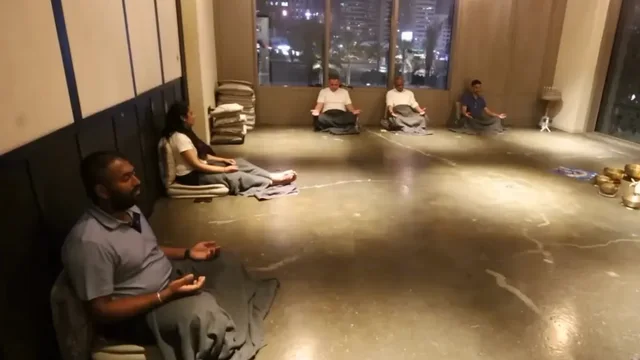
Service
Wellness Retreats in the UAE
Dr. Smitha's own retreats in the UAE, from two days or a weekend to a week or ten days, with no long-haul flight needed.

Wellness retreats · UAE and international
A wellness retreat with Dr. Smitha Prabhakar is time away to rest and reset, designed and led by her in the UAE, from two days to ten.
She does not hand the programme to someone else and arrive for the opening talk. She plans the days, chooses the practices and leads the sessions herself.
Her own phrase for it is simple. The power is in the pause.
This page explains what a wellness retreat is, what a day with her looks like, how long to go for and how to choose well, whichever retreat you pick.
A retreat is rest and reset. It is not medical or psychological care, and it does not replace your doctor.

“The power is in the pause.”
Recovery is part of the work
Wellness Retreats
Choose by what you need most right now, not by the photos.
Some people need a quiet reset close to home. Others want time with other women, or a proper stop after a long, hard year.
Each page below covers one kind of retreat, what it involves and how to tell whether it fits you.
Service
Dr. Smitha's own retreats in the UAE, from two days or a weekend to a week or ten days, with no long-haul flight needed.
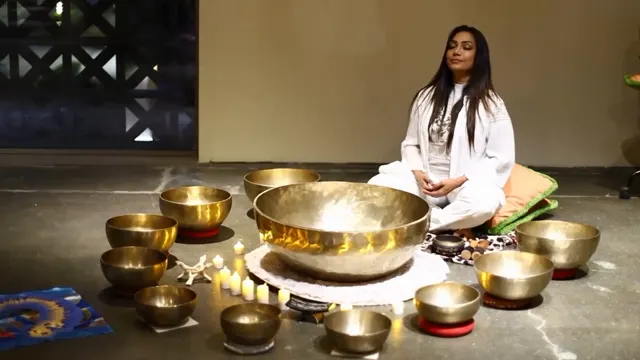
Service
Sharing circles, gentle movement and guided rest in a group of women, for a few days without carrying everyone else.

Service
Guided time away to rest and sleep when you are running on empty, with a plan for home. Rest and reset, never clinical care.
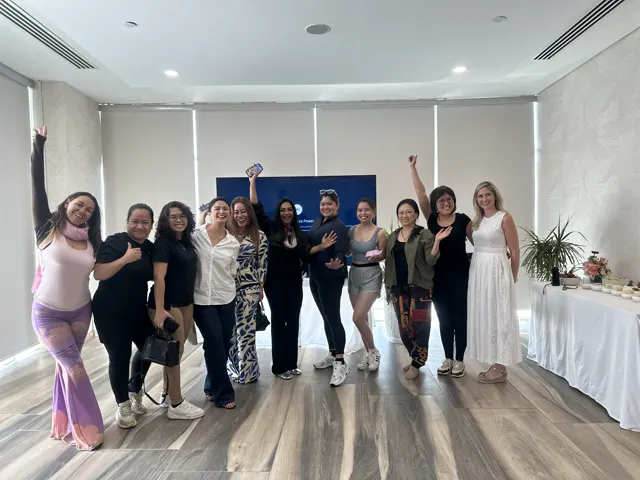
Service
What separates an expert-led retreat in a five-star setting from a beautiful hotel with a spa menu.

Service
Breath, gentle yoga, meditation and sound, offered at a level beginners can join.
 Stock image
Service
Bali, Thailand and India. Details and dates will be announced soon.
 Stock image
Service
Time away from phones and screens, and what to arrange before you switch off.
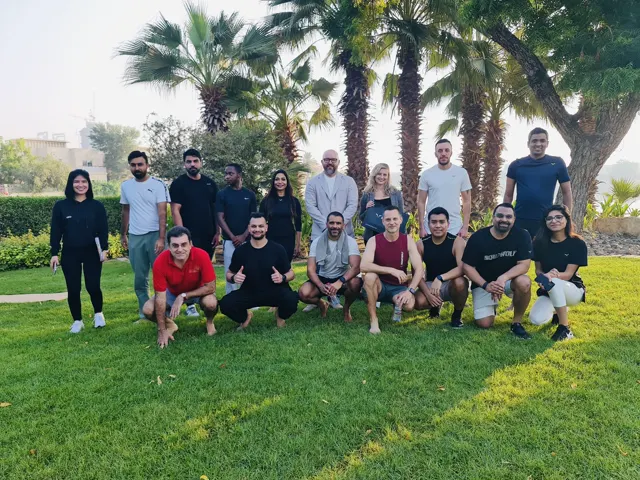
Service
What a couples retreat involves, and the questions to ask before you book one together.
A wellness retreat is planned time away from ordinary life, usually from two days to two weeks, built around rest, movement, breath, food and reflection, with someone leading the programme.
That last part is what separates a retreat from a holiday. A holiday leaves the day to you.
A retreat gives the day a shape, so you do not spend it on your phone by the pool.
Retreats vary widely. Some centre on yoga and meditation, some on fitness, some on spa time and some on time with a particular group, such as women or a company team.
Health and wellness retreats tend to sit at the gentler end: rest, sleep, breathwork, nourishing food and space to think.
Dr. Smitha's retreats sit at that gentler end. They are about rest first, because most of the people she meets are not short of activity.
They are short of proper rest.
A wellness retreat is not a medical programme. Dr. Smitha is not a medical doctor and does not diagnose or prescribe.
It is not a clinic, and it does not fix health conditions.
If a retreat promises to fix a health condition in a week, take that as a warning sign rather than a selling point.
Each retreat is designed around the people who are coming. The rhythm of a day usually looks something like this.
A slow start. Breathwork and gentle movement, outdoors when the weather allows, before anyone opens a laptop.
Nourishing food, then short talks on rest, pressure and energy, in plain words you can use on a Tuesday back at work.
Sound and guided deep rest, then free time. Free time is part of the programme, not a gap in it.
Wind-down practices before bed, so the last hour of the day is quiet rather than spent scrolling.
The core practice running through every retreat is guided deep rest. You lie down, a voice guides your attention, and you do not need to clear your mind or get anything right.
Many people who are told to relax find they cannot. Their mind will not go quiet on command.
Guided rest works because it gives the mind something simple to follow.
Every session is optional. If you need to sit something out, you sit it out.
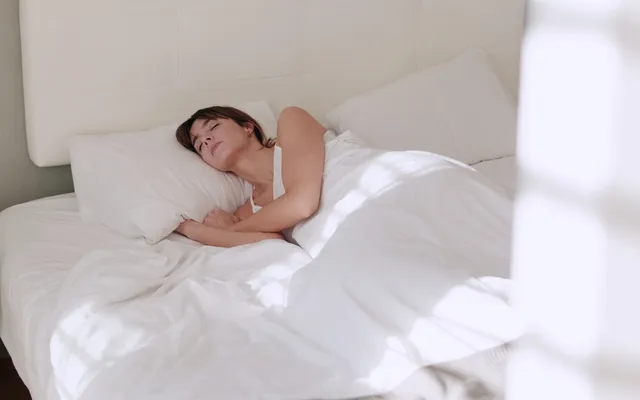
Two days or a weekend suits a first retreat. A week or ten days gives sleep, energy and daily habits more time to shift.
Dr. Smitha's retreats come in four lengths.
| Length | Who it tends to suit | What the time makes room for |
|---|---|---|
| 2 days | A first retreat, or a short reset between busy months | Rest, breathwork and a few practices to take home |
| A weekend | People who cannot take leave from work | A real break from screens, routine and the inbox without using annual leave |
| 1 week | People who want a deeper reset | Enough days to settle in before the rest really starts |
| 10 days | People coming out of a long, demanding stretch | Space to rest fully first, then rebuild slowly |
Length matters less than people think, and what happens afterwards matters more.
A meta-analysis of vacation studies found that holidays give a small lift to health and wellbeing, and that the lift tends to fade soon after people go back to work (de Bloom and colleagues, 2009).
So a longer retreat with nothing to take home can be worth less than a short one with a clear plan.
On every retreat, Dr. Smitha spends time on the plan for home: a few practices you will actually use on a Monday.
Among them is The Deep Rest Reset, so the rest you found on retreat has somewhere to live afterwards.
The Deep Rest Reset is a guided audio with a 27-minute Full Reset and a 10-minute Short Reset.
Start with what you need, then check who leads it, what a day looks like and how long you can really be away.
Lists of the best wellness retreats and top wellness retreats usually rank the setting. The setting matters, but it is not the main thing.
These are the questions Dr. Smitha suggests asking of any retreat, including hers.
Rest, time with other women, a proper stop after burnout, a team reset or simply some time offline. Each points to a different kind of retreat.
Ask who designs the programme and who runs the sessions each day. Some retreats are led by the person on the poster; others are run by whoever is on shift.
Ask for a sample day. A packed schedule from six in the morning to ten at night is not a rest retreat, however it is described.
Be honest about leave, family and work. A weekend you can fully switch off for is better than a week spent answering email.
Ask what you will take with you. If the answer is a tote bag and a discount code, keep looking.
Be wary of retreats that promise to fix or reverse a health problem. A good retreat talks about rest and support, and tells you to see your doctor for medical questions.
Affordable wellness retreats and affordable all-inclusive wellness retreats both exist, but "all-inclusive" means different things in different places.
Ask whether the price covers the room, meals, every session, transfers and any spa extras, so you are comparing like with like.
They can be, if you go for the right reasons and plan what happens afterwards.
The research is encouraging but early, and it is fair to say so plainly.
A systematic review of 23 studies of residential retreats found that all of them reported some benefit, but most were small, poorly described and had little follow-up, so firm conclusions were hard to draw (Naidoo, Schembri and Cohen, 2018).
In one controlled study, healthy women spent six days at a resort, either on a meditation retreat or simply relaxing. Both groups reported similar large improvements in wellbeing straight afterwards (Epel and colleagues, 2016).
The same study found that the women who learned meditation tended to keep lower distress for longer than those who only relaxed.
Dr. Smitha reads that as a useful pointer. Time away helps on its own, and taking a practice home seems to help the effect last.
No retreat, including hers, can promise a result. What a good one can give you is real rest, some distance, and a few tools for the weeks after.
Dr. Smitha Prabhakar leads burnout and mental wellness retreats built around rest, sleep and guided deep rest, with a plan for home, and her doctoral research was on conscious deep rest, sleep, performance and longevity.
They are not clinical, and they do not replace a doctor.
Exhausted people often arrive expecting to relax at once, then find their mind keeps running. That is normal on day one.
So the days are simple: more sleep, guided deep rest each afternoon, real distance from the phone and, before you leave, a short list of what you will keep doing.
That list matters because burnout grows out of work, not out of a lack of holidays. WHO links it to long-term workplace stress (WHO, 2019), so the week you return to has to change a little too.
The Burnout Recovery pages cover the signs, causes and the way back in more depth, including coaching between retreats.
Anyone who feels low most days, is struggling to function or has thoughts of self-harm should see a doctor before booking a retreat.
You do not need a long-haul flight to rest properly.
For people who cannot take two weeks off, a reset close to home is often the realistic option, and sometimes the better one.
Dr. Smitha runs her own corporate and wellness retreats in the UAE, in the four lengths above.
For eight years she was Wellness Director at Rixos The Palm, where she designed and ran wellbeing retreats on Saadiyat Island in Abu Dhabi, alongside wellbeing programmes for the hotel teams.
That is where she learned what guests actually use on a retreat, and what they skip.
The Wellness Retreats in the UAE page covers how her retreats in the UAE work, what a day looks like and how to hear about the next one.
She has also spoken at the Kayan Wellness Festival in Abu Dhabi, and her wider background, including more than 20 years of building and leading in the UAE, is on the Executive Coaching page.
For a lot of women, rest comes last on a long list of other people's needs.
A retreat with only women in the group changes that for a few days.
Dr. Smitha has led women's transformation circles, and her work with women also includes the MetLife WiSe women's programme and the ZOYA women's wellbeing event.
The Women's Wellness Retreats page explains what happens on one, whether beginners are welcome and how long they run.
Some people search for a retreat by its style rather than its purpose. Three styles come up most often.
A beautiful setting helps people settle. But a five-star hotel with a spa menu is not the same as a retreat.
The difference is the programme, and the person leading it. Luxury Wellness Retreats covers what to look for beyond the thread count.
Yoga and meditation retreats suit people who want movement and stillness in the same day.
You do not need to be flexible or experienced. Yoga and Meditation Retreats explains what a typical day involves and how beginners take part.
A digital detox retreat is time away from phones and screens, with something better to do instead.
For people whose day never ends because the phone never stops, this alone can feel like a holiday. Digital Detox Retreat covers how long to go for and what to set up before you leave.
Some couples want to rest together rather than separately. A couples retreat gives two people the same slower days and the same practices.
Couples Wellness Retreat explains what one usually involves, and whether it suits you.
A little preparation makes the first day much easier.
Most people arrive still running at work speed, and it takes a day to come down. Planning ahead shortens that.
Dr. Smitha shares practical details, such as what to bring and how the days run, with each retreat once it is confirmed.
International retreats with Dr. Smitha are being planned in Bali, Thailand and India.
Details and dates will be announced soon, and nothing is confirmed until it is announced.
She designs and leads them herself, as she does her retreats in the UAE.
The Upcoming International Retreats page is where the details will appear first. If you would like to hear when they are announced, send a message on WhatsApp.
Teams burn out together as well as alone.
A corporate retreat takes a leadership team or a staff group out of the office to rest, reconnect and look at how it works, with rest built into the programme rather than squeezed between meetings.
Dr. Smitha's retreats for organisations run in the same four lengths and are priced per proposal.
When a company pays, any team-level feedback is anonymised and never identifies individuals without their consent.
Corporate Wellness Retreats covers planning, length and venue for teams, and the wider Corporate Wellness page lists her other programmes for organisations.
Most of what happens on retreat is gentle, though breath practice and exercise are not for everyone.
| Practice | Check with your doctor first if you... |
|---|---|
| Breathwork | are pregnant, have epilepsy, a heart condition, high or low blood pressure, or a panic disorder |
| Exercise | have a heart condition, an injury, or have been inactive for a long time |
Share any health condition, injury or pregnancy with Dr. Smitha when you book, and ask your doctor if you are unsure.
Guided deep rest supports rest. It does not replace sleep, and it is not medical care for any condition.
Medication stays exactly as your doctor prescribed it, on retreat and after.
A wellness retreat is planned time away, usually from two days to two weeks, built around rest, movement, breath, food and reflection, with a facilitator leading the programme.
Dr. Smitha's retreats put rest first.
Start with what you need: rest, connection, a stop after a long hard stretch, or time away with your team.
Then check who leads it, ask for a sample day, be honest about how long you can be away, and ask what you will take home.
Two days or a weekend works well for a first reset.
A week or ten days gives sleep, energy and habits more time to shift, and suits people coming out of a long, demanding period.
If you are in crisis in the UAE, call 999 for the police or 998 for an ambulance.
Dr. Smitha is a coach and wellness consultant, not a therapist or medical doctor, so her work is coaching, not therapy.
Contact
If you are not sure which retreat would suit you, tell Dr. Smitha what the last few months have been like, and she will tell you honestly whether a retreat is the right next step.