Deep Rest
Every guide on NSDR, yogic sleep and deep rest, with Dr. Smitha's own practices.

Deep rest · Online and in the UAE
Yoga nidra is a guided, lying-down practice where you follow a voice and stay aware while you rest, and Dr. Smitha Prabhakar teaches it to busy minds.
"Nidra" means sleep, which is why the practice is often called yogic sleep.
You rest deeply, but you are not trying to fall asleep.
This guide is part of Dr. Smitha's Deep Rest work: what the practice is, how a session runs, how long it takes, and what the research does and does not show.

“The power is in the pause.”
Clear decisions start with a calm mind
It is a form of guided meditation that you do lying down, with no yoga poses at all.
A nursing review of 29 studies describes it this way and notes that it can be done in the privacy and comfort of your own home (Musto and Hazard Vallerand, 2023).
In Dr. Smitha's words, it is rest that never asks for a blank mind.
You do not need to clear your thoughts or get anything right.
Instead, a voice gives your attention something to follow, one step at a time.
That is why people who say "I cannot meditate" often find it easier than sitting in silence. Some teachers call it nidra yoga; the practice is the same.
Many styles of meditation ask you to sit upright and hold your focus on one thing, such as the breath or a word (NCCIH).
Yogic sleep asks for less effort: you lie back and let the voice move your attention for you.
If silence is the hard part for you, the guide to rest without meditation has more options.
Most sessions Dr. Smitha leads follow the same gentle shape, whatever their length.
You lie down, close your eyes if that feels comfortable, and let the floor, sofa or bed take your weight.
You notice your breathing without trying to change it.
There is no special technique and nothing to count.
The voice names one part of the body after another, and your attention travels with it.
This part is close to a body scan meditation, which can also be practised on its own.
You stay in a quiet, aware rest for a few minutes.
The voice brings you back to the room before you sit up.
Many traditional versions also include a short intention, often called a sankalpa, that you repeat near the start and the end (Cleveland Clinic).
Longer methods add stages such as noticing feelings and thoughts without judging them (Cleveland Clinic).
A script is simply the words a teacher reads aloud, in the order above.
Dr. Smitha's advice is to start with a recording rather than reading a script to yourself, because following a voice is the whole point.
Once the shape feels familiar, some people guide themselves through it quietly in bed.
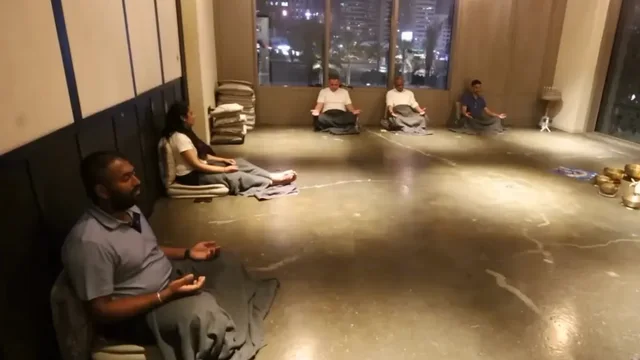
Yes, it suits beginners because you only have to lie still and listen.
No flexibility, experience or special kit is needed: a quiet place, something soft to lie on and a pair of headphones are enough.
Dr. Smitha tells new clients to choose a length they will actually repeat, rather than the longest one they can find.
A short session done most days usually serves you better than a long one done once.
Most of the people Dr. Smitha works with are tired but still wired: the laptop is closed, but the mind is still at work.
For them, she uses guided deep rest as a daily habit, not an occasional treat.
Her own practice is The Deep Rest Reset, a guided deep rest audio with a 27-minute Full Reset and a 10-minute Short Reset.
The Short Reset fits into the middle of a full day; the Full Reset suits the end of the working day.
It grew out of her doctoral research on conscious deep rest, sleep, performance and longevity.
She also tried deep rest on herself first, in a documented 100-day self-study that she describes as exploratory, not proof.
In her work, deep rest is always an addition to a full night's sleep, never a replacement for it.
The Deep Rest Reset page explains both resets and when to use them.
If your body stays on high alert long after work ends, nervous system regulation looks at that side of the picture.
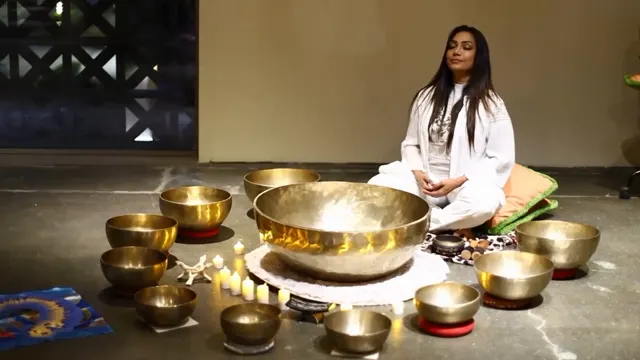
The research is promising but still early, and most studies are small.
A 2025 meta-analysis of 73 studies found that the practice was linked with lower stress, anxiety and depression scores (Ghai and colleagues, 2025).
The authors warn that study quality was low and that the effects are probably overestimated.
A 2026 meta-analysis of studies in adults with poor sleep found possible benefits, but rated the evidence as very low certainty and called the findings preliminary (Singh and colleagues, 2026).
The yoga nidra for sleep guide covers this in more detail, including how to use it at bedtime.
Treat it as a way to support rest, not as a treatment.
The 2023 nursing review reached a similar view: most studies were positive, but they differed so much that firm conclusions are not yet possible (Musto and Hazard Vallerand, 2023).
Meditation practices are usually considered low risk, but a 2020 review found that some people have negative experiences, most often anxiety or low mood (NCCIH).
| Practice | Check with your doctor first if you... |
|---|---|
| Guided deep rest of any kind | have a mental health condition, have been through trauma, or find that lying still with your eyes closed makes you feel worse |
If a session leaves you more unsettled, stop, open your eyes and sit up; you can try a shorter one another day or skip it.
Yogic sleep supports rest and wind-down; it does not treat insomnia or any other condition.
The NHS advises seeing a GP if you have had trouble sleeping for months or if it is making daily life hard to cope with (NHS).
The NHS also notes that mindfulness is not right for everyone, and some people find it makes them feel worse (NHS).
If you feel low most days, or if a practice brings up distressing memories, please talk to a doctor or a psychologist.
Dr. Smitha is a coach, not a doctor, and she will say so plainly if she thinks clinical support would help you more.
If you have thoughts of harming yourself, contact a doctor or emergency services now. In the UAE, call 999 for the police or 998 for an ambulance.
They are close cousins rather than the same thing.
NSDR, or non-sleep deep rest, describes a very similar guided, lying-down practice in modern, secular language. Yoga nidra is the older, traditional form.
It is a guided practice, also called yogic sleep, where you lie still and follow a voice through the breath and the body, staying aware while you rest.
It needs no poses and no experience.
Yes. Cleveland Clinic notes it can be done in a recliner or in bed (Cleveland Clinic).
At night, falling asleep is fine. During the day, a mat or a sofa makes it easier to stay aware.
Most sessions run from about 10 to 30 minutes, and some traditional ones are longer.
Dr. Smitha's Short Reset is 10 minutes and her Full Reset is 27 minutes; start with the length you will actually repeat.
Every guide on NSDR, yogic sleep and deep rest, with Dr. Smitha's own practices.
Using the practice as a wind-down at bedtime.
A step-by-step body scan for rest.
Dr. Smitha's 27-minute Full Reset and 10-minute Short Reset.
Ways to switch off if sitting in silence is not for you.
If you are in crisis in the UAE, call 999 for the police or 998 for an ambulance.
Dr. Smitha is a coach and wellness consultant, not a therapist or medical doctor, so her work is coaching, not therapy.
Contact
If you want help building this practice into a full week, tell Dr. Smitha what your days look like and she will suggest where to start.