
Guide
What Is Burnout?
The World Health Organization description in plain words, the three dimensions, and whether burnout is a medical diagnosis.

Burnout recovery · Online and in the UAE
Burnout is exhaustion, distance from work and lower effectiveness after long-term work stress. Dr. Smitha Prabhakar coaches leaders to rebuild recovery, online or in the UAE.
The people she sees with it are rarely lazy or weak. Usually they are the most capable person in the room.
Tired, but still wired. Successful on paper, and empty underneath.
This page explains what is happening, how to tell it apart from an ordinary hard month, and what a realistic way back looks like when you cannot simply stop.
It is coaching, not therapy: support for an anxious, always-on mind, alongside your doctor when you need one.

“The power is in the pause.”
Recovery is part of the work
Burnout Recovery
Start with the guide that matches the question in your head today.
Each one is short, plain and written for people who are still working while they read it.
When you want help with the way back, the coaching page explains how one-to-one work with Dr. Smitha runs.
Guide
The World Health Organization description in plain words, the three dimensions, and whether burnout is a medical diagnosis.
 Stock image
Guide
The early signs high performers tend to miss, from waking up tired to weekends that no longer refill you.
 Stock image
Guide
Five practical steps back, written for people who cannot put everything on hold.
 Stock image
Leaders and founders
How burnout hides behind results in managers and founders, and how to recover without taking months off.
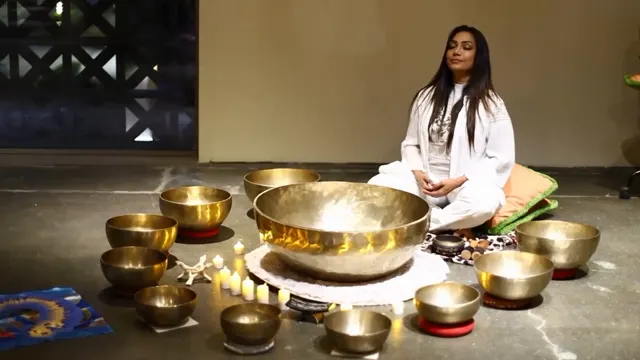
One-to-one coaching
One-to-one coaching with Dr. Smitha, online or in person in the UAE. Coaching, not therapy.
The World Health Organization describes burnout as a syndrome resulting from chronic workplace stress that has not been successfully managed (WHO, 2019).
It names three dimensions:
WHO lists burnout in ICD-11 as an occupational phenomenon, not as a medical condition. It also says the term refers specifically to work and should not be used for other areas of life.
Dr. Smitha puts it more simply. Stress is too much, for now.
Burnout is what happens when too much goes on for too long, with too little recovery in between.
The What Is Burnout? guide covers the definition, the research questionnaire most studies use, and the diagnosis question in more depth.
Stress usually feels like too much: urgency, pressure, a mind in overdrive. Burnout tends to feel like too little left.
That difference matters, because the two call for different responses.
| When it is stress | When it is burnout | |
|---|---|---|
| How it feels | Too much: pressure, urgency, overdrive | Too little left: flat, empty, detached |
| How your energy feels | Tired, but still pushing | Drained, and rest no longer refills you |
| About work | You still care, maybe too much | Growing distance or cynicism |
| After a break | Usually eases | Often comes back within days |
The NHS lists common signs of stress as feeling overwhelmed, constantly worrying, struggling to make decisions, being irritable and sleeping too much or too little (NHS).
Many of those overlap with burnout, which is why people often cannot tell which one they are in.
A useful question Dr. Smitha asks is this: when you finally get a few days off, do you come back restored, or does the heaviness return by Tuesday?
If it is the second, and you feel more distant from work you used to care about, it is worth reading further and talking to someone.
The overlap also runs the other way. Some of what looks like burnout can be depression, and a review of 92 studies found the line between the two is not clear-cut (Bianchi, Schonfeld and Laurent, 2015).
That is one reason a doctor should be part of the picture if you feel low most days.
High performers rarely notice burnout early. They are very good at pushing through.
From the outside, everything still works. From the inside, it costs more every week.
These are the early signs Dr. Smitha sees most often in the people she works with:
Some people also notice body signals such as tension, headaches, poor sleep or catching every cold.
Those can have many other causes, so please see a doctor to rule them out rather than assuming it is burnout.
On their own, none of these signs is a diagnosis. Together, they are worth taking seriously.
The Signs of Burnout guide goes through the early, emotional and physical signs one by one.
Burnout grows out of long-term work stress without enough recovery to balance it.
It is rarely one bad week. It is months or years of demands that keep arriving faster than you can come down from them.
Research by Christina Maslach and Michael Leiter, whose questionnaire is the best known in the field, points to six areas of working life where a poor fit raises the risk: workload, control, reward, community, fairness and values (Maslach and Leiter, 2016).
In plain words, that looks like:
The same authors argue that burnout should be seen as a feature of the work situation, not only a personal weakness.
That matters for the guilt many people carry. Burnout is not proof that you are not strong enough.
Sleep plays a part too. In a Swedish study that followed 388 working adults for two years, sleeping less than six hours a night was the main risk factor for later clinical burnout, alongside high work demands and thinking about work during leisure time (Söderström and colleagues, 2012).
Dr. Smitha sees the same pattern of an always-on day. Constant demands, little control, no real end to the working day, and a body that rarely gets to switch off.
The phone adds to the load, because it never lets the day end.
Burnout in leaders often hides behind results.
The numbers are there, the team is delivering, and the person at the top is quietly running on coffee and willpower.
In the leaders Dr. Smitha works with, the signs of executive burnout tend to look like this:
Responsibility for other people seems to matter here. In a Swedish study of people with clinically diagnosed exhaustion, managerial responsibilities were among the ongoing stressors linked with exhaustion that was still there 7 to 12 years later (Eklöf and colleagues, 2022).
That study looked at a severe, diagnosed form of exhaustion, so it does not describe every tired manager. It does show why leaders should not wait until something breaks.
Many leaders ask Dr. Smitha how to recover without taking time off. Often that is simply the reality of their role.
So the work is about building recovery into the working week rather than waiting for a holiday that never quite comes.
The Burnout at Work and in Leaders guide covers how burnout shows up in managers and founders, and what to do while you keep working.
Dr. Smitha Prabhakar has spent more than 20 years building, leading and delivering in the UAE, and her full background is on the Executive Coaching page.
Recovery is usually gradual, and it looks different for everyone.
It depends on how long the burnout built up, how deep it goes and what actually changes in your life and work.
Dr. Smitha does not believe in pretending you can stop everything. These are the steps she uses with clients:
Saying "this is burnout, not weakness" is the first step. It turns a vague sense of failing into something you can work on.
Check the signs, and see a doctor to rule out other causes.
Recovery that only happens at the weekend is usually too little, too late.
Protecting sleep comes first. Then come small pockets of recovery inside the working day, not only after it.
A few minutes between meetings, after a hard call or before you walk in the door at home. Short, repeated pauses give the body a chance to come down before the next demand.
Some of the load can be changed, reduced or handed over. Some cannot.
Being honest about which is which is where much of the real change starts.
That could be a coach, a doctor or someone you trust. Burnout tends to shrink your view, and a second person helps you see the options again.
If it is not easing, or you feel unwell, please see a doctor.
The How to Recover from Burnout guide takes each step further, with examples for people who still have a full calendar.
One honest note on the evidence: researchers have pointed to a shortage of studies testing which burnout interventions work best (Maslach and Leiter, 2016).
So anyone who promises a quick fix is promising more than the research can support.
Dr. Smitha does not treat burnout. She is a coach and wellness consultant, not a doctor or therapist.
What she does is help leaders understand what is happening, notice the early signs, and rebuild recovery into a real working week, often without stopping work.
Burnout Recovery Coaching is one-to-one, online or in person in the UAE.
Together you look at what is draining you most, what can change, and how to plan the next weeks so you do not slide back.
The number of sessions depends on the person, and is agreed after the free 20-minute call.
Many people with burnout are told to relax, and find they cannot. Their mind will not go quiet on command.
Guided deep rest works differently. You do not need to clear your mind or get anything right, because a voice gives your attention something to follow.
The Deep Rest Reset is a guided audio with a 27-minute Full Reset and a 10-minute Short Reset.
The Full Reset suits the end of the day, and the Short Reset fits the middle of a full one.
Guided deep rest supports rest. It does not replace sleep, and it is not a treatment for burnout or any sleep problem.
Between sessions, Dr. Smitha teaches short practices you can use alone: between meetings, after a difficult conversation, and in the first and last hour of the day.
She also works on how you end the working day, so the evening can actually begin.
For pressure that has not yet tipped into burnout, the stress management page covers everyday stress in more detail.
If Dr. Smitha thinks you need a doctor or a psychologist more than a coach, she will say so.
Anyone who feels low most days, cannot function, or has thoughts of harming themselves should see a doctor first.
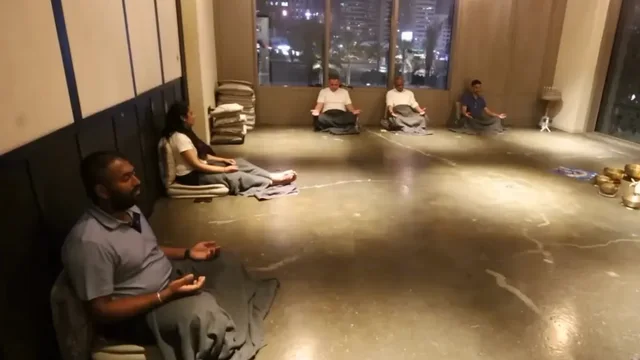
Burnout is not only an individual story. It is also shaped by how work is designed.
The World Health Organization says excessive workloads, low job control and long or inflexible hours are risks to mental health at work. It recommends that employers act on working conditions themselves, not only offer individual support, and that managers are trained to recognise and respond to distress (WHO, mental health at work).
Dr. Smitha runs corporate wellness sessions for leadership teams and employees: guided rest sessions, masterclasses, workshops and programmes, from the CEO to every employee.
Her corporate work includes Mindful Leadership and Stress Management programmes for serving Dubai Police officers, and emotional resilience and stress-mastery workshops for Ford's distributor network.
Corporate work is priced per proposal.
When a company pays, any team-level feedback is anonymised and never identifies individuals without their consent.

There is no fixed timeline, and nobody can honestly promise one.
Dr. Smitha's experience is that recovery is gradual, and depends on how long burnout built up and what actually changes.
Small, repeated changes usually matter more than one long break.
Research on severe cases shows why patience matters. In one Swedish study of people diagnosed with exhaustion disorder, about two in three no longer met the criteria 7 to 12 years later, while about one in three still did (Eklöf and colleagues, 2022).
That was a clinical group, much more unwell than most people reading this page. It is still a reminder to act early rather than wait for a crash.
If your symptoms are getting worse, or have not eased after a few weeks of real change, please see a doctor.
In the UAE, start with a doctor if you have physical symptoms, feel low most days or are struggling to function, and add a coach for the recovery habits.
A doctor can check for conditions that can look like burnout, such as depression or thyroid problems, and refer you to a psychologist or psychiatrist if you need one.
A licensed psychologist or psychiatrist diagnoses and treats mental health conditions.
A coach works on a different part of the picture. With Dr. Smitha, that means understanding what is draining you, building recovery into the week, guided deep rest and a calmer relationship with pressure.
Many people use both: a doctor to rule things out, and a coach to change how the week runs.
When you choose a coach for burnout, ask four questions:
Dr. Smitha coaches online wherever you are, and in person in the UAE.
Coaching is for people who are still functioning but want to recover better. It is not the right first step for everyone.
Burnout can overlap with depression, and with physical illness.
If you feel low most days, cannot function, or have thoughts of harming yourself, please see a doctor or psychologist now.
If you have physical symptoms such as chest pain, ongoing headaches or exhaustion that does not lift, see a doctor to rule out other causes.
If you are in immediate danger in the UAE, call 999 for the police or 998 for an ambulance.
Dr. Smitha will tell you if she thinks clinical support would help you more than coaching.
Stress feels like too much. Burnout feels like too little left.
If a few days off no longer restore you, and you feel more distant from work you used to care about, it may be burnout rather than a hard patch.
A doctor can rule out other causes, such as depression or a physical problem.
Burnout is a state of exhaustion, mental distance from your job and reduced effectiveness at work, caused by long-term workplace stress that has not been successfully managed.
WHO lists it as an occupational phenomenon, not a medical condition.
Burnout comes from long-term work stress without enough recovery in between.
Common drivers are a heavy workload, little control, effort that goes unrewarded, poor team relationships, unfairness and a clash with your values. Short sleep and a working day that never really ends add to the risk.
It differs for everyone. How long burnout lasts depends on how long it built up, how severe it is and what changes in your work and life.
For most people recovery is gradual rather than sudden. If it is not easing, or you feel unwell, please see a doctor.
If you are in crisis in the UAE, call 999 for the police or 998 for an ambulance.
Dr. Smitha is a coach and wellness consultant, not a therapist or medical doctor, so her work is coaching, not therapy.
Contact
If any of this sounds like your week, a short, private conversation with Dr. Smitha is a calm place to start. There is no obligation, and fees are shared once you know what would help.