Guide
Yoga Nidra: Guide & Practice
What yoga nidra is, how a session runs from start to finish, and how it relates to NSDR.

Deep rest · Online and in the UAE
NSDR, or non-sleep deep rest, is guided rest you do lying down and awake, and it is the subject of Dr. Smitha Prabhakar's doctoral research.
Most of the people who come to her are tired, but still wired. The laptop closes and the mind stays on shift.
Sleep happens, yet it does not feel like rest. And being told to relax does not help, because a busy mind will not go quiet on command.
This page explains what NSDR and yoga nidra are, what the research does and does not show, how deep rest compares with a nap and with sleep, and how to start.
Deep rest supports rest and wind-down. It does not replace sleep, and it is not a treatment for insomnia or any sleep problem.

“The power is in the pause.”
Recovery is part of the work
Deep Rest
Start with whatever matches the question in your head tonight.
The guides are short and plain, written for people who will read them between meetings or in bed.
If you want to practise straight away, The Deep Rest Reset is free.
Guide
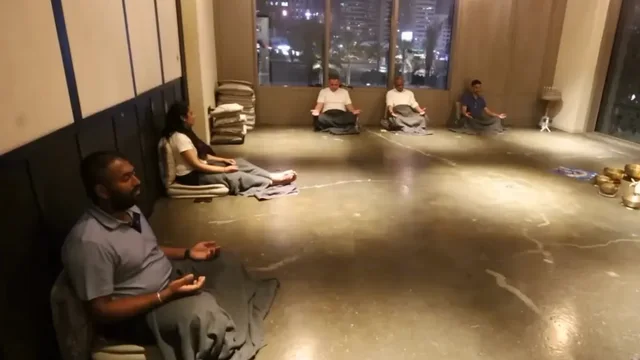
What yoga nidra is, how a session runs from start to finish, and how it relates to NSDR.
Guide
Using yoga nidra as part of your wind-down, when to do it, and what happens if you drift off.

Guide
A step-by-step body scan you can do in five minutes or thirty.
 Stock image
Guide
What makes a guided rest or sleep meditation worth coming back to, including a short audio for between meetings.
 Stock image
Guide
The sleep stages in plain words, and how to read the deep sleep number on your watch.
 Stock image
Guide
The everyday habits that make room for deeper sleep, and what to do about a busy mind at bedtime.
 Stock image
Service
Dr. Smitha's free guided deep rest audio, with a 27-minute Full Reset and a 10-minute Short Reset.
 Stock image
Service
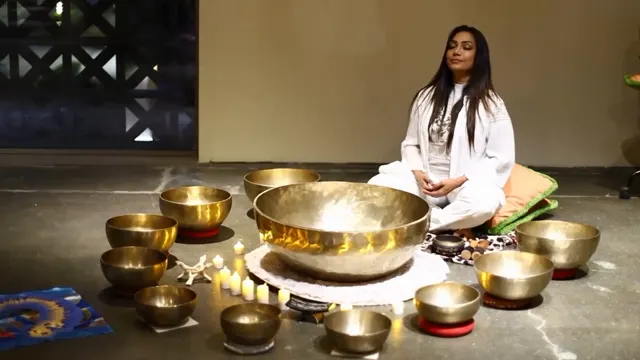
Lying-down sessions with singing bowls and gongs, for people who would rather listen than follow instructions.

Guide
Why the night wake-up happens and what to do when the worry loop starts.
 Stock image
Guide
Ways to switch off for people who cannot sit still, or simply do not like meditating.
NSDR stands for non-sleep deep rest. It is a guided practice in which you lie still with your eyes closed and follow a voice, aiming to stay awake while you rest.
The voice usually takes your attention through slow breathing and then through the body, one part at a time.
There is no posture to hold and nothing to achieve. You are not trying to empty your mind.
Dr. Smitha describes it simply: instead of asking for a blank mind, a voice gives your attention something to follow.
The term NSDR was popularised by Stanford neurobiology professor Andrew Huberman on his podcast, as a plain, secular name for guided rest that shares its structure with yoga nidra. That is why people who search for NSDR Huberman or Huberman NSDR scripts often land on yoga nidra recordings.
You will also see it written without the hyphen, as non sleep deep rest.
The practice underneath is much older. The Yoga Nidra: Guide and Practice page explains where it comes from and how a traditional session is built.
Researchers have started to study NSDR under that name. One 2026 trial described it as a brief guided relaxation technique involving slow breathing and sequential body awareness (Boukhris and colleagues, 2026).
NSDR is the newer, plain-language label; yoga nidra is the traditional practice it grew from, and in daily use the two overlap heavily.
Both ask you to lie down, stay aware and follow a guided sequence of breath and body attention.
| NSDR | Yoga nidra | |
|---|---|---|
| Where the name comes from | A modern, secular term | A traditional yogic practice; "nidra" means sleep |
| What you do | Lie still, breathe slowly, follow attention through the body | The same, often with an intention at the start and visualisation |
| Typical length | Often 10 to 20 minutes | Often 20 to 40 minutes |
| Language | Neutral, no spiritual terms | May include yogic terms and ideas |
| Aim | Deep rest while staying awake | Deep rest while staying aware |
Some people use NSDR as an umbrella term that covers yoga nidra, self-hypnosis recordings and similar guided rest. Others use the two words as if they mean the same thing.
For you, the practical question is simpler: a neutral voice and a short session, or a fuller practice with an intention and imagery?
Dr. Smitha teaches both. She has hosted International Yoga Day in the UAE for six years, and she uses NSDR language with leaders who would never call themselves yoga people.
A body scan meditation is a close cousin: the same travel of attention through the body, usually without the other steps.
Early research on NSDR and yoga nidra is encouraging for how people feel, but it is small, mixed and not strong enough for big promises.
Here is a fair summary of what has been published.
In a 2026 trial, 102 active young adults did either a single 10-minute guided NSDR session or a control activity (Boukhris and colleagues, 2026).
The NSDR group reported feeling less sleepy, less fatigued and less stressed afterwards, and their heart rate dropped a little more during the session.
The authors called the physical findings modest and said they should be read with caution. Physical performance did not change.
Most research uses the older name. A 2025 review pooled 73 studies of yoga nidra with more than 5,000 participants and found benefits for stress, anxiety and low mood (Ghai and colleagues, 2025).
The same authors warned that the studies were of low quality and that the effects are probably overestimated.
In a randomised trial run online in Germany, people listened to an 11-minute or a 30-minute yoga nidra recording, ideally every day for two months, and the effects on wellbeing were small (Moszeik and colleagues, 2025).
For sleep, a 2026 review of yoga nidra in people with poor sleep found the certainty of evidence was very low, and called the findings preliminary (Singh and colleagues, 2026).
The US National Center for Complementary and Integrative Health describes the relaxation response as slower breathing and a reduced heart rate, the opposite of the stress response (NCCIH).
The same fact sheet says relaxation techniques on their own do not seem especially promising for sleep problems.
So the honest answer is this. NSDR is a low-cost, low-effort way to rest that many people find calming. It is not a proven fix for anything.
Anyone who tells you a 10-minute recording will change your hormones or your brain is promising more than the research shows.
Not in the same way: a nap is sleep and NSDR is rest while awake, and in a small study that compared them directly, the nap did more for tiredness.
That 2026 study gave 60 active young adults either a 25-minute nap opportunity, a 10-minute NSDR session or no break (Boukhris and colleagues, 2026).
Forty minutes later, the nap group felt less fatigued and more ready to perform. The NSDR session made no significant difference in that study.
It was one small study, with young, active people and a short NSDR session, so it does not settle the question. It does show that the two are different tools.
| A short nap | NSDR or yoga nidra | |
|---|---|---|
| What happens | You fall asleep for a while | You stay awake, or close to it |
| Waking up | You may feel groggy if you wake from deep sleep | No sleep to wake from, so no grogginess to wait out |
| Where it fits | A quiet room and enough time to sleep and come round | A chair, a sofa or the floor, with headphones |
| If your nights are poor | The NHS advises people with insomnia not to nap during the day | A way to rest without napping |
| Does it replace night sleep? | No | No |
Cleveland Clinic explains that waking from deep sleep can bring sleep inertia, a foggy, confused feeling that lasts about 30 minutes (Cleveland Clinic).
That is one reason Dr. Smitha suggests NSDR rather than a nap in the middle of a working day.
You can lie down, rest for 10 or 20 minutes and walk straight back into the afternoon.
If you can nap, and naps do not spoil your night, a short nap may serve you better when you are truly sleepy.
Neither is better across the board. Choose a nap when you are sleepy and have time to sleep; choose NSDR when you need to come down without falling asleep, or when daytime naps make your nights worse.
Deep rest is an addition to sleep, never a substitute for it. That is the line Dr. Smitha draws in her own research and in every session she teaches.
On average, adults need 7 to 9 hours of sleep, according to the NHS (NHS, insomnia).
No recording, however good, gives you back a short night.
What guided rest can do is help you wind down so sleep has a better chance, and give you a short pause in the day when sleep is not an option.
If you are constantly tired during the day, the NHS says you are probably not getting enough sleep. That is worth looking at before adding any new practice.
Many people come to deep rest through a sleep tracker, so it helps to know what the numbers mean.
Sleep runs in cycles. One cycle usually takes about 90 to 120 minutes, and most people go through four or five a night (Cleveland Clinic).
| Stage | Share of adult sleep | What happens |
|---|---|---|
| Stage 1, the lightest sleep | About 5% | You drift off; it lasts only a few minutes |
| Stage 2 | About 45% | Sleep deepens; you pass through it many times a night |
| Stage 3, deep sleep | About 25% | Slow, strong brain waves; the body repairs and supports the immune system |
| REM (rapid eye movement) sleep | About 25% | Most dreams happen; brain activity looks close to waking |
Source for the table: Cleveland Clinic, sleep basics.
Cleveland Clinic says deep sleep, stage 3, makes up about 25% of total sleep time in adults. Children need more, and the older you get, the less you need.
You need it to wake up feeling rested. Without enough stage 3 sleep, Cleveland Clinic says, you can feel tired and drained even after a long night.
The How Much Deep Sleep Do You Need? guide turns that into hours and minutes, and explains why the number varies from night to night.
Dr. Smitha's advice on trackers is the same for every client. The number on your watch is a guide, not a medical sleep test, so look at your trend over weeks rather than one night.
If you want more of it, the How to Get More Deep Sleep guide covers the habits the NHS recommends, from regular times to a dark, quiet bedroom.
Rest and recovery are not the same as stopping. Many of the leaders Dr. Smitha works with stop working at 7 PM and are still in the meeting at midnight.
That is why she says rest is a skill, and it can be learned.
A busy mind treats silence as an invitation to plan. Ask it to empty, and it fills up faster.
Guided rest works differently because it gives attention a job: follow the voice, notice the breath, move from the feet to the knees.
You do not need to clear your mind or get anything right. When thoughts arrive, you come back to the next instruction.
The Guided Deep Rest and Sleep Meditation page explains what makes a recording worth repeating, from the voice to the length.
Some people have tried meditation and hated it. Others cannot sit still long enough to begin.
For them, Dr. Smitha suggests a way in that does not feel like meditation at all: a slow walk without the phone, two minutes of longer out-breaths, a body scan, or a sound bath where bowls and gongs do the work.
The Rest Without Meditation guide lists the options and how to start each one.
For many people, the hardest hour is the last one before bed. The laptop is closed, but the mind is still at work.
The Yoga Nidra for Sleep guide shows how to use a lying-down practice as part of your wind-down, and what to do if you fall asleep halfway through.
Then there is the night itself. If you surface at 3 AM with tomorrow already running, the night is not the time to solve it.
Keep the lights and the phone off, lengthen the out-breath and write the thought down for the morning. The Waking Up at 3 AM guide explains why the wake-up happens and what to try.
If the tiredness has turned into weekends that no longer refill you and growing distance from work you used to care about, read the burnout recovery guides as well.
For the always-on, braced feeling in the body, the nervous system regulation pages go further.
You do not need any experience, equipment or flexibility. You need 10 to 30 minutes and somewhere you will not be disturbed.
Lie on your back on a mat, a sofa or a bed, or sit back in a chair that supports your head. Put headphones on, silence your phone and let the floor or the chair take your weight.
Notice your breath without changing it at first. Then let the out-breath become a little longer than the in-breath, gently.
Move your attention slowly from one part of the body to the next: toes, feet, ankles, all the way up to the face.
You are not trying to relax each part. You are only noticing it.
Stay for a few minutes in the quiet that follows, awake but not doing anything.
Move your fingers and toes, take a fuller breath and open your eyes before you sit up.
If you drift off, that is fine at night. During the day, sitting up a little can help you stay aware.
Ten minutes fits the middle of a full day. For a fuller downshift, allow 20 to 30 minutes.
The best length is the one you will repeat. A short session most days is more useful than a long one you never get to.
Guided relaxation is generally considered safe for healthy people. Occasionally, people report unwanted experiences such as more anxiety, intrusive thoughts or a fear of losing control (NCCIH).
If that happens, open your eyes, sit up and stop. You can try again another day with a shorter session.
| Practice | Check with your doctor first if you... |
|---|---|
| Breathwork | are pregnant, have epilepsy, a heart condition, high or low blood pressure, or a panic disorder |
| Guided deep rest or NSDR | have, or may have, a medical or mental health condition |
The breathing in an NSDR session is gentle and slow, not forceful breathwork. Even so, if any breathing instruction feels uncomfortable, breathe normally and keep following the voice.
The Deep Rest Reset is Dr. Smitha's own guided deep rest audio, and it is free.
It comes in two lengths: a 27-minute Full Reset and a 10-minute Short Reset.
It was built for people whose minds stay on shift after the laptop closes. It walks you out of the day's replay and tomorrow's rehearsal, step by step.
| Short Reset | Full Reset | |
|---|---|---|
| Length | 10 minutes | 27 minutes |
| Best time | The middle of a full day | The end of the working day |
| What it is for | Taking the edge off before the afternoon | A fuller downshift before the evening |
| Experience needed | None | None |
The Deep Rest Reset supports rest and wind-down. It does not replace sleep, and it is not a treatment for insomnia or any sleep problem.
Deep rest is not a side interest for Dr. Smitha. It is her research subject.
Her PhD (2026) thesis is titled "Conscious Deep Rest as the Bridge Between Sleep, Performance and Longevity".
Before teaching it to anyone else, she tested deep rest on herself in a documented 100-day self-study, measured with a consumer wearable and qEEG brain mapping.
It was a study of one person. It was designed to explore and to generate questions, not to prove anything for anyone else, and she presents it that way.
The central idea of her work is that deep rest sits alongside sleep and never replaces it.
She is a wellness consultant, not a medical doctor, and she does not diagnose or treat sleep problems.
Dr. Smitha Prabhakar has spent more than 20 years building, leading and delivering in the UAE, and her full background is on the Executive Coaching page.
Not everyone wants a voice in their ear. Some people rest more easily when sound does the guiding.
A sound bath is a lying-down session. You rest on a mat with your eyes closed while Dr. Smitha plays singing bowls and gongs.
Sound baths are part of Dr. Smitha's healing work in the UAE. Dates and fees are on request.
A sound bath is a relaxation practice, not a medical treatment.
Deep rest is easy to teach to a room, and it needs no kit beyond somewhere to sit or lie down.
Dr. Smitha runs guided rest sessions, masterclasses, workshops and programmes for leadership teams and employees through her corporate wellness work.
She has spoken on the main stage at the World Biohack Summit Dubai and presented at the Kayan Wellness Festival in Abu Dhabi.
Corporate work is priced per proposal.
When a company pays, any team-level feedback is anonymised and never identifies individuals without their consent.
Deep rest is a wellbeing practice. It is not the right answer to every sleep problem.
See a doctor if changing your sleep habits has not helped, if you have had trouble sleeping for months, or if poor sleep is affecting your daily life in a way that makes it hard to cope (NHS, insomnia).
Loud snoring or pauses in breathing at night can be signs of sleep apnoea, which needs a doctor and sometimes a sleep clinic.
If you feel low most days, cannot function, or have thoughts of harming yourself, please see a doctor or psychologist now.
If you are in immediate danger in the UAE, call 999 for the police or 998 for an ambulance.
Talk to your doctor before changing any medication, including anything you take for sleep.
Dr. Smitha will tell you if she thinks clinical support would help you more than coaching or guided rest.
NSDR, non-sleep deep rest, is a guided practice where you lie still, follow a voice through breath and body, and stay awake while you rest.
Small studies suggest people often feel calmer and less tired afterwards, but the evidence is early and of mixed quality. Treat it as a useful way to rest, not a cure for anything.
They do different jobs. A nap is sleep. In a small study, a short nap helped with tiredness more than a brief NSDR session did.
NSDR suits the middle of a working day, when you need to come down without falling asleep or waking up groggy. Neither replaces a full night.
Ten minutes is enough to take the edge off in a busy day. For a fuller downshift, give it 20 to 30 minutes, such as the 27-minute Full Reset.
Pick a length you can repeat on most days.
About 25% of total sleep in adults, according to Cleveland Clinic.
The share falls as you get older, so compare your tracker with your own trend rather than someone else's number.
No. Deep sleep and REM sleep each make up about a quarter of adult sleep, and you need both.
Deep sleep is when the body repairs and helps you wake rested; REM is when most dreaming happens.
If you are in crisis in the UAE, call 999 for the police or 998 for an ambulance.
Dr. Smitha is a coach and wellness consultant, not a therapist or medical doctor, so her work is coaching, not therapy.
Contact
If your mind is still at work long after the day ends, a short, private conversation with Dr. Smitha is a calm place to begin. There is no obligation, and fees are shared once you know what would help.