Mind Body Coaching
Coaching for the stress you carry, the rest you get and the strength you build.
Mind body coaching · Online and in the UAE
Breathwork means changing how you breathe on purpose, and Dr. Smitha Prabhakar starts busy people with slow breathing and a longer out-breath.
Your breath is always with you. In her experience it is the fastest way to change gear.
A few minutes is enough to begin, and you do not need special equipment or a quiet room.
This guide is part of Dr. Smitha's Mind Body Coaching pages, written for leaders and professionals who are tired but still wired.

“The power is in the pause.”
Clear decisions start with a calm mind
Breathwork is any practice in which you change the pace, depth or pattern of your breathing deliberately, usually to calm down, focus or rest.
It differs from simply watching the breath. In mindfulness you observe the breath as it is; in breathwork you guide it.
The NIH's complementary health centre describes slow, deep breathing from the belly, called diaphragmatic breathing, as one of the standard relaxation techniques (NCCIH).
Relaxation techniques aim to bring on the body's "relaxation response", which the same source describes as the opposite of the stress response.
For stress, the gentlest place to start is slow breathing with an out-breath that is longer than the in-breath.
Dr. Smitha teaches four gentle breathwork techniques, in this order:
The NHS breathing exercise for stress is similar in spirit: breathe gently into the belly, counting steadily to five on the way in and five on the way out, for at least five minutes (NHS).
In a one-month Stanford study, five minutes a day of "cyclic sighing", a pattern built around long exhales, improved mood more than the same time spent in mindfulness meditation (Balban and colleagues, 2023).
A meta-analysis of randomised trials found breathwork was linked with lower self-reported stress than control conditions, with a small to medium effect (Fincham and colleagues, 2023).
The authors rated most of those studies at moderate risk of bias, so the evidence is promising rather than settled.
Dr. Smitha's reading of it is simple: gentle breathing is low effort and worth practising, but it is one support among several, not a fix.
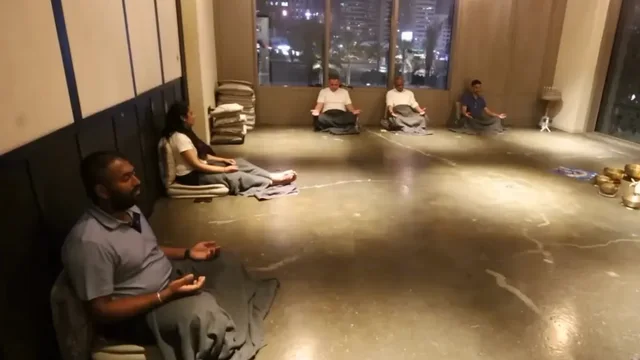
The technique Dr. Smitha gives busy leaders is a five-minute switch-off between the laptop and the evening, using the longer out-breath.
It works best as a daily habit attached to something you already do, such as closing the laptop or parking the car.
If the working day keeps running in your head at night, the Stress Management pages look at that pattern in more detail.
For most people, two to ten minutes of gentle breathing is a sensible amount, and the NHS suggests at least five minutes for its own exercise.
Longer workshop formats exist, and some sessions run for an hour or more with a facilitator.
Dr. Smitha prefers short, regular practice: a few minutes most days rather than a long session once a month.
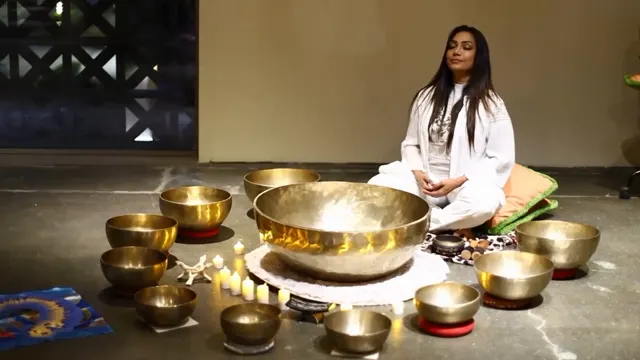
Holotropic breathwork is a long session of fast, deep breathing, usually with music and a trained facilitator, that researchers describe as a prolonged, voluntary hyperventilation procedure (Rhinewine and Williams, 2007).
The same paper says more rigorous research is needed before any claim about it can be confirmed.
Dr. Smitha is trained in breathwork and holotropic breathwork, yet for everyday stress she starts with gentle, slow breathing instead of intense styles.
Fast breathing can make some people dizzy or light-headed. If that happens, stop and breathe normally.
Mindfulness breathing exercises ask you to notice the breath without changing it, then bring your attention back each time the mind wanders.
Somatic breathing is a loose term for breathing with attention on body sensations, such as the belly rising or the shoulders softening.
Both overlap with gentle breathwork, and Dr. Smitha often combines them. The Mindfulness for Busy Leaders guide has one-minute exercises, and Somatic Coaching Explained sets out where body-based coaching ends and clinical work begins.
In Dr. Smitha's mind body coaching, breathwork is the doorway, and rest is the room behind it.
After a few weeks of short breathing practice, many clients add guided deep rest from The Deep Rest Reset, a 27-minute Full Reset and a 10-minute Short Reset.
You do not need to clear your mind or get anything right; a voice gives your attention something to follow.
This is support for an anxious, always-on mind, not treatment.
Gentle breathing is generally considered safe for healthy people, but check with a doctor first if any line below applies to you.
| Practice | Check with your doctor first if you... |
|---|---|
| Breathwork | are pregnant, have epilepsy, a heart condition, high or low blood pressure, or a panic disorder |
Rare reports link some relaxation techniques with worse symptoms in people with epilepsy, certain psychiatric conditions or a history of trauma (NCCIH).
Breathwork supports wellbeing. It does not diagnose or treat any medical or mental health condition.
See a doctor if you feel short of breath, have chest pain, or have anxiety or panic that affects your daily life.
A psychologist or psychiatrist can assess anxiety, panic or low mood and offer treatment.
If you have thoughts of harming yourself, contact a doctor or emergency services now. In the UAE, call 999 for the police or 998 for an ambulance.
It is the practice of changing your breathing on purpose, its speed, depth or rhythm, to help you calm down, focus or rest.
Gentle forms such as slow belly breathing are the simplest way to start.
Slow breathing with a longer out-breath, such as in for four and out for six, is simple and low effort.
Box breathing, belly breathing and a humming out-breath are other gentle options to try.
Two to ten minutes is enough for most people, and short daily practice tends to be easier to keep up than long sessions.
Avoid intense or fast styles if you are pregnant or have a heart or lung condition, and stop if you feel dizzy.
Sit or lie down at the end of the working day and breathe in for four and out for six for three to five minutes.
Let your shoulders drop on every out-breath, then notice how you feel before the evening starts.
Coaching for the stress you carry, the rest you get and the strength you build.
One-minute exercises for a full calendar.
How stress shows up in the body, explained simply.
What body-based coaching is, and what it is not.
If you are in crisis in the UAE, call 999 for the police or 998 for an ambulance.
Dr. Smitha is a coach and wellness consultant, not a therapist or medical doctor, so her work is coaching, not therapy.
Contact
If you would like a breathing practice that fits your real working day, tell Dr. Smitha what your evenings look like and she will suggest where to begin.