Wellness and Longevity Consulting
Every consulting service for hotels, developers and companies.
Wellness and longevity consulting · UAE
Good wellness program design, says Dr. Smitha Prabhakar, starts with the people it serves, builds wellbeing into their day and measures honestly what changes.
Most wellness programmes do not fail loudly. They fail quietly, because nobody uses them.
This guide sets out how Dr. Smitha designs programmes for companies, hotels and destinations, as part of her wellness and longevity consulting. Use it on your own, or bring her in to design one with you.

“The power is in the pause.”
Clear decisions start with a calm mind
Listen to the people it is for, choose one clear focus, build short sessions into their normal day, train the people who run it, then measure and adjust.
That is the whole method. The detail is in how each step is done.
Ask who the programme is for, what they need and what gets in the way. A short anonymous survey, a few conversations and a look at the calendar usually tell you more than a vendor brochure.
For a company, that means hearing from every level, not only HR. For a hotel, it means understanding why guests come and what state they arrive in.
Stress, rest, movement or connection. Pick one or two, not everything at once.
A programme that tries to cover nutrition, fitness, sleep, finance and mindfulness in its first quarter usually covers none of them well.
Short, regular sessions where people already are. A fifteen-minute guided rest after lunch reaches more people than a full-day event on a Saturday.
Dr. Smitha often includes The Deep Rest Reset, a 27-minute Full Reset and a 10-minute Short Reset, so people have something to use between sessions.
Quality holds when the people delivering the programme know what they are doing and why. That includes managers, who decide whether staff feel able to attend.
Track participation and feedback from the start, and look at trends over time. Then change what is not working, rather than repeating it next year.
The five steps above apply, with three extra points for a company.
Leaders go first. When senior people join sessions and protect the time, staff follow. When leaders skip them, the programme becomes optional in practice.
Fit the existing benefits. Start from what already exists: health insurance, an employee assistance service, any gym benefit. The programme should sit alongside them, never in place of them.
Plan the year, not the event. The US Centers for Disease Control and Prevention recommends a coordinated, systematic and comprehensive approach to workplace health programmes (CDC). In practice, that means one planned programme, adjusted over time.
If you are asking how to design a wellness program for a smaller team, the same logic works at a smaller scale. One focus, one regular session, one honest way to check in.
For the sessions themselves, Dr. Smitha's corporate wellness programmes cover what her team delivers on site, and employee wellbeing programmes covers wellbeing for every person on the payroll.
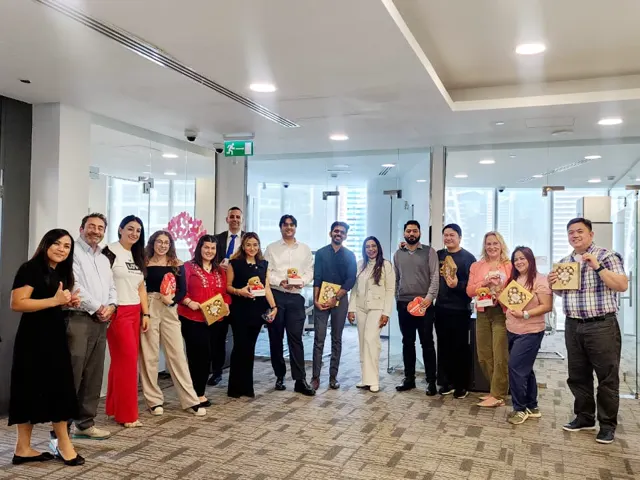
A strong programme usually has four things.
| Element | What it looks like |
|---|---|
| Something for every level | Sessions for leaders, for teams and for individuals, not only one group |
| A regular rhythm | Weekly or monthly sessions, not one-off events |
| Practical tools | Things people can use the same day: a short reset, a guided rest, a better end to the working day |
| A way to measure | Simple, honest check-ins that people trust enough to answer |
For a hotel or resort, the same elements apply to guests and staff. The hospitality, resort and spa consulting page covers how that looks in a property.
Many programmes include movement or breathing practices. Participants should have clear guidance and be told to check with a doctor first if any of these apply.
| Practice | Check with your doctor first if you... |
|---|---|
| Breathwork | are pregnant, have epilepsy, a heart condition, high or low blood pressure, or a panic disorder |
| Exercise | have a heart condition, an injury, or have been inactive for a long time |
Use participation, short anonymous check-ins and trends over time, such as absence and engagement, and read them with care.
Be honest about what a programme can show. A large randomised trial at a US employer found that after 18 months a workplace wellness programme raised some self-reported health behaviours, but showed no significant change in clinical health measures, health spending, absence or job performance (Song and Baicker, JAMA, 2019).
Dr. Smitha takes two lessons from findings like this.
First, do not promise a financial return in the first year. Second, measure what the programme can honestly influence: who takes part, whether they use the tools, and how they describe their working week.
Check-ins only work if people trust them. When a company pays, any team-level feedback is anonymised and never identifies individuals without their consent.

Dr. Smitha designed and ran guest and team programmes as Wellness Director at Rixos The Palm for eight years.
She has also designed corporate programmes for organisations such as Ford's distributor network, MetLife and Zurich International, and programmes serving Dubai Police officers.
The lesson she repeats most is simple. A programme has to work in a normal week, with normal staffing, when nobody senior is watching.
That is why her designs favour short, repeated sessions over big launches, and why she spends time training the people who will run them.
Corporate programmes can be delivered in English, with certain protocols in Arabic.
Dr. Smitha Prabhakar designs wellness programmes for companies, hotels and destinations in the UAE, as a wellness consultant or longevity director, with a focus on rest and recovery.
Fees are per proposal, after a free 20-minute call. For residential projects, see the wellness real estate service.
A wellness programme is wellbeing support, not medical care. It does not replace a doctor, an occupational health service or an employee assistance programme.
If someone in your organisation is struggling to cope, has symptoms that worry them or may have a medical or mental health condition, they should speak to a doctor first.
If anyone is in immediate danger, call emergency services.
Ask employees what they need, involve leaders from the start, choose one or two focus areas and build short sessions into the working day.
Then track participation and feedback, and adjust the plan over the year.
Listen to the people it serves, choose a clear focus, build sessions into their day, train the people who run it, then measure and adjust.
Something for every level, a regular rhythm, practical tools people can use straight away, and a simple, trusted way to check in.
Through participation, short anonymous check-ins and trends such as absence and engagement over time, interpreted with care.
Research suggests health and cost changes can take longer to appear than many vendors claim, so set expectations early.
Every consulting service for hotels, developers and companies.
Programmes for hotel guests and teams.
Resident programmes designed in from the start.
For organisations building longevity into their offer.
If you are in crisis in the UAE, call 999 for the police or 998 for an ambulance.
Dr. Smitha is a coach and wellness consultant, not a therapist or medical doctor, so her work is coaching, not therapy.
Contact
Tell Dr. Smitha who the programme is for and what you have tried so far, and she will suggest where to start.