Burnout Recovery
Every guide on burnout, plus coaching with Dr. Smitha, online and in the UAE.

Guide · Burnout recovery
How to recover from burnout, in Dr. Smitha Prabhakar's experience, starts with naming it honestly and then rebuilding recovery into the week you actually have.
Most advice begins with "take time off". Most of the leaders she works with cannot, at least not straight away.
This guide is part of Dr. Smitha's burnout recovery work: the steps she uses with clients, what the research says, and when a doctor should come first.

“The power is in the pause.”
Clear decisions start with a calm mind
Recovering from burnout means changing the balance between what drains you and what refills you, for long enough that rest starts to work again.
The World Health Organization describes burnout as the result of chronic workplace stress that has not been successfully managed (WHO, 2019).
It has three parts: exhaustion, growing mental distance or cynicism about your job, and a drop in how effective you feel at work.
WHO lists it as an occupational phenomenon, not a medical condition, so recovery is about the work and the way you live around it.
Dr. Smitha puts it simply: too much, for too long, with too little recovery in between.
These are the steps Dr. Smitha uses with clients, and none of them asks you to pretend you can stop everything.
Saying "this is burnout, not weakness" is where recovery begins.
The people Dr. Smitha sees with burnout are rarely lazy; they are usually the most capable person in the room, and the last to admit they are running on empty.
Before you decide it is burnout, see a doctor. Cleveland Clinic advises a check-up first, because conditions such as thyroid problems or depression can look similar (Cleveland Clinic).
Recovery that only happens at the weekend usually arrives too late.
Cleveland Clinic suggests aiming for seven to nine hours of sleep a night as part of recovery (Cleveland Clinic).
Dr. Smitha adds small pockets of rest during the working day, not only a long lie-in on Saturday.
A few quiet minutes between meetings stop one demand spilling into the next.
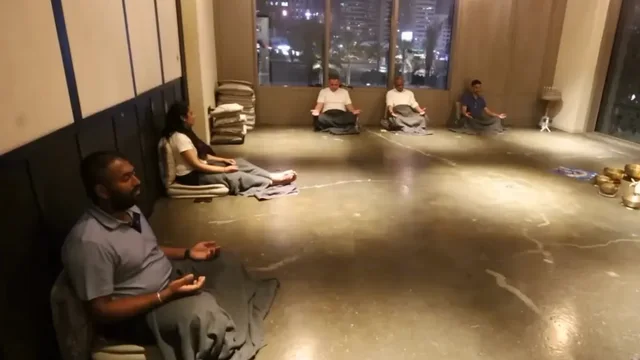
Many of her clients use the 10-minute Short Reset from The Deep Rest Reset in the middle of the day, and the 27-minute Full Reset in the evening.
Guided deep rest supports rest. It does not replace sleep, and it is not a treatment for burnout or any sleep problem.
The deep rest pages explain how these guided sessions work.
Look at the week honestly: the meeting that always overruns, the decisions only you seem able to make, the evenings that belong to the inbox.
Pick one thing to change, one to reduce and one to hand over.
Small cuts, repeated, matter more than one dramatic gesture.
Burnout is heavier when you carry it alone.
That place can be a coach, a doctor or someone you trust, and it can be more than one of them.
Coaching with Dr. Smitha is coaching, not therapy: diagnosis and treatment belong with licensed health professionals.
The research supports a mix of personal habits and changes to the work itself, and it is less settled than many articles suggest.
A meta-analysis of 91 samples found that people who mentally detach from work in their own time tend to report less exhaustion and better sleep (Wendsche and Lohmann-Haislah, 2017).
The same analysis linked doing work tasks during non-work time with less detachment, which is why Dr. Smitha pays so much attention to how the working day ends.
A review of physician burnout found that both individual strategies and changes to how work is organised can reduce burnout (West and colleagues, 2016).
Another meta-analysis found the benefits of burnout programmes were small overall, and larger when the organisation changed, not only the person (Panagioti and colleagues, 2017).
Burnout researchers Christina Maslach and Michael Leiter describe six areas where a poor fit between a person and their job can lead to burnout: workload, control, reward, community, fairness and values (Maslach and Leiter, 2016).
They also note that good evaluations of burnout interventions are still scarce.
So rest matters, and so does the job you go back to.
There is no shortcut: the quickest route is usually to act early, cut the biggest drain first and build recovery into every day rather than saving it for a holiday.
Cleveland Clinic says recovery can take anywhere from a few months to a few years, depending on what caused it, how deep it runs and how soon you reach out for support (Cleveland Clinic).
In Dr. Smitha's experience, recovery is gradual and looks different for everyone, depending on how long it built up and what actually changes.
People who wait for the perfect moment to start often find the moment never comes.
Many of Dr. Smitha's clients run companies or teams and cannot simply step away.
For them, she builds recovery into the real working week: protected first and last hours, fewer small decisions, short resets between meetings and guided deep rest in the evening.
The guide to burnout at work and in leaders covers this in more detail.
If your body stays on high alert long after the laptop closes, nervous system coaching for executives looks at that part of the picture.
Coaching can help you plan your recovery, but it does not treat burnout, and some situations need a professional first.
Please see a doctor if you feel low most days, cannot function at work or at home, or if things are not easing after a few weeks of real change.
Long-term burnout has been linked in prospective studies with insomnia, depressive symptoms, headaches and prolonged fatigue (Salvagioni and colleagues, 2017).
Physical signs like these can have other causes too, so see a doctor to rule them out.
A psychologist or psychiatrist is the right person for diagnosis and treatment of a mental health condition.
If you have thoughts of harming yourself, contact a doctor or emergency services now. In the UAE, call 999 for the police or 998 for an ambulance.
Dr. Smitha will say so plainly if she thinks clinical support would help you more than coaching.
Name it, see a doctor to rule out other causes, protect your sleep, add short recovery breaks to every day and change the one thing that drains you most.
Recovery is usually gradual, so steady small changes tend to matter more than one long break.
Start by giving the feelings somewhere to go: a conversation with someone you trust, a coach, or a doctor if your mood stays low.
Then make room each day for something that is not work, and set one clear limit around evenings or weekends that you actually keep.
See it as a signal about your load, not a judgement on you.
Reduce what you can, ask for help with what you cannot, and get support early rather than waiting until you crash.
There is rarely one quick fix.
Burnout usually eases when recovery outweighs demand for long enough, through daily rest, clearer limits and changes to the work itself, with a doctor involved if you feel unwell.
It varies widely; Cleveland Clinic puts it at a few months to a few years.
How long it takes depends on how deep the burnout runs, what caused it and how much changes. If it is not easing, please see a doctor.
Every guide on burnout, plus coaching with Dr. Smitha, online and in the UAE.
The early signs high performers tend to miss.
How burnout shows up in founders, managers and leadership teams.
One-to-one coaching to rebuild recovery into your week.
If you are in crisis in the UAE, call 999 for the police or 998 for an ambulance.
Dr. Smitha is a coach and wellness consultant, not a therapist or medical doctor, so her work is coaching, not therapy.
Contact
If you want a plan for recovering without putting your whole life on hold, tell Dr. Smitha where you are and she will suggest a sensible first step.