Guide
Breathwork for Stress
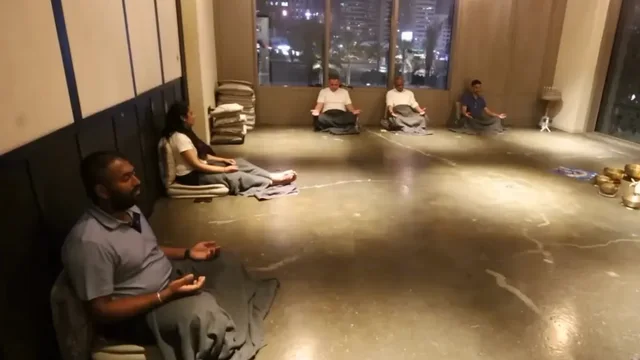
What breathwork is, the gentlest techniques for stress, and a five-minute practice to switch off after work.

Mind body coaching · Online and in the UAE
A wellness coach helps you change how you think, rest, move and recover. Dr. Smitha Prabhakar is a mind body wellness coach, online and in person in the UAE.
Her clients usually look successful on paper and still cannot switch off.
Tired, but still wired.
They rarely need another goal. They need a way to come down, and a body that can keep up with the life they have built.
This page explains what a wellness coach does, what mind body coaching means in practice, and how to tell whether it is the right kind of help for you.
It is coaching, not therapy: support for an anxious, always-on mind, alongside your doctor whenever you need one.

“The power is in the pause.”
Recovery is part of the work
Mind Body Coaching
These five guides each take one part of the work and explain it plainly.
Read the one closest to the question you have today.
Each guide ends with simple steps you can try on your own, and a clear line on when to see a doctor instead.
Guide
What breathwork is, the gentlest techniques for stress, and a five-minute practice to switch off after work.
Guide
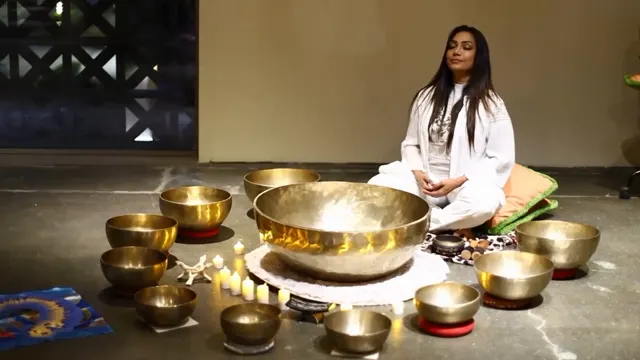
Mindfulness exercises that take a minute, built into the things you already do every day.

Guide
How thoughts and stress show up in the body, and how the body can help settle the mind, explained simply.
 Stock image
Guide
What a growth mindset and a fixed mindset are, what the research really shows, and how to build a steadier one under pressure.
 Stock image
Guide
What "somatic" means, how somatic coaching differs from clinical body-based treatment and somatic experiencing, and who each one is for.
A wellness coach is someone trained to help you change everyday habits, such as how you handle stress, how you rest, how you move and how you talk to yourself, and to keep those changes going.
The word covers a wide field. Some coaches focus on nutrition, some on fitness, some on stress, and some on the whole picture.
Researchers who reviewed 284 published studies found a shared core to health and wellness coaching (Wolever and colleagues, 2013).
In plain words, that core looks like this:
The same review noted that the field had been defined inconsistently and that results had been mixed.
That honesty matters. A wellness coach can help you build better habits, but no coach can promise a health outcome.
A wellness coach does not diagnose or treat medical or mental health conditions. If you have symptoms that worry you, a doctor comes first.
A wellness coach helps you see where your energy actually goes, choose a few changes that matter, practise them and stay with them.
That sounds simple. The hard part, for most busy people, is the middle step: choosing.
Dr. Smitha's clients often arrive with a long list of things they believe they should fix. Sleep, food, exercise, phone, temper, focus, all at once.
Her approach is to start smaller. One breath practice. One protected pause in the day. One change to how the evening begins.
A typical stretch of coaching with her looks like this:
Between sessions you practise alone. That is where most of the change happens.
Mind body coaching is wellness coaching that works on the mind and the body together: the stress you carry, the rest you get, the strength you build and the way you speak to yourself every day.
Dr. Smitha Prabhakar offers mind body coaching online worldwide, and in person in the UAE.
Many coaches work on one side only. A mindset coach talks about thoughts. A trainer works on the body. A meditation teacher works on attention.
Dr. Smitha's view is that you cannot coach the mind and ignore the body, or train the body and ignore the mind.
When someone is tired but wired, a pep talk rarely helps. Neither does a harder workout on four hours of sleep.
So the work moves between both sides. Some sessions start with breath and end with a decision. Others start with a worry and end with a few minutes of guided rest.
Sessions run in English. Arabic is available for certain protocols only.
If you are comparing providers online, look for someone who says clearly what coaching is not, and who will tell you when you need a doctor instead.
Dr. Smitha's mind body coaching has four ways in. Each one is taught simply, and you do not need to clear your mind or get anything right.
Breath is the fastest way to change gear, and it is always with you.
The NHS describes a calming breathing exercise for stress that takes a few minutes and can be done anywhere, and says you get the most benefit if you do it regularly (NHS).
Dr. Smitha is trained in breathwork, including holotropic breathwork. With busy clients she starts gently: slow breathing with a longer out-breath, practised between meetings and before the evening.
The Breathwork for Stress guide covers the techniques, how long a session should take, and who should check with a doctor before trying stronger methods.
Mindfulness, for busy people, is not an hour on a cushion. It is a few moments of attention, often.
The NHS describes mindfulness as paying more attention to the present moment, to your own thoughts and feelings and to the world around you, and says this can improve your mental wellbeing (NHS).
Dr. Smitha is trained as a Master Trainer in Mindfulness and Peak Performance, and has delivered this work for UAE government entities, corporate organisations and private clients.
As a mindfulness coach, she teaches it in one-minute moments: three breaths before you open your inbox, feet on the floor before a hard conversation, a walk between meetings where you actually feel each step.
The Mindfulness for Busy Leaders guide gives five of these exercises and shows how to grow them into a short daily practice.
Many high performers are told to relax and find they cannot. Their mind will not go quiet on command.
Guided rest works differently, because a voice gives your attention something to follow.
The Deep Rest Reset is Dr. Smitha's guided rest audio, with a 27-minute Full Reset and a 10-minute Short Reset. Her doctoral research is on conscious deep rest, sleep, performance and longevity.
Guided deep rest supports rest. It does not replace sleep, and it is not a treatment for any sleep problem.
More on how it works is on the deep rest page.
The body is not only where stress lands. It is also part of how you recover.
The World Health Organization says regular physical activity provides significant physical and mental health benefits for adults (WHO).
Dr. Smitha holds Active IQ Level 2 and Level 3 certificates in fitness instructing and personal training, the FSSA Certified Personal Trainer certificate, and the FSSA Certified Nutrition Coach certificate.
That means strength, movement and nourishment sit inside the same coaching relationship as mindset and rest, instead of in a separate appointment with someone else.
Her fitness page explains personal training with her in more detail.
The mind and body affect each other in both directions: a worrying thought can tighten your shoulders, and a slow breath can loosen the worry.
Part of this runs through the autonomic nervous system, which works without your conscious control.
Cleveland Clinic explains that it has a sympathetic side, which prepares the body for action, and a parasympathetic side, which handles "rest-and-digest" processes (Cleveland Clinic).
The NHS notes that stress can affect how you feel physically and mentally, and can cause physical symptoms such as a faster heartbeat or sweating (NHS).
It also says it is not always easy to recognise when stress is the reason you are feeling or acting differently.
That is why the body is part of every session with Dr. Smitha. You notice where stress shows up, settle it with breath, rest and gentle movement, and practise short daily habits that help you come down from high alert.
Physical symptoms have many possible causes. Chest pain, a racing heart or symptoms that keep coming back should always be checked by a doctor first.
The Mind-Body Connection guide explains the two-way link in more depth. Body-based approaches such as somatic coaching are covered in Somatic Coaching Explained.
The way you speak to yourself shapes what you try next.
"I can't do this" and "I can't do this yet" are one word apart, and they lead to very different weeks.
The growth mindset idea comes from the psychologist Carol Dweck: the belief that abilities can grow with effort, practice and feedback.
It is worth being honest about the evidence. Two large meta-analyses of school studies found the overall effects of mindset on achievement were weak, with some support for benefits in students who were academically at risk or from low-income backgrounds (Sisk and colleagues, 2018).
So a mindset is not a magic switch. Dr. Smitha treats it as one practical habit among others.
In her experience, a tired brain defaults to fear. That is why mindset work and recovery work belong together.
She is trained as an NLP Master Practitioner and in the neuroscience of habits, and uses that training to help clients notice the stories they tell themselves under pressure.
The Growth Mindset guide covers growth and fixed mindsets, how to develop a steadier one, and how to foster a positive mindset without forcing it.
There are several ways to start, from a free guide to a private programme.
Coaching for an anxious, always-on mind: steadier attention, better recovery and a calmer relationship with pressure.
It runs online wherever you are, or in person in the UAE. How many sessions you need is agreed after the free 20-minute call.
Strength, fitness, nourishment and mindset, trained together in one guided programme of 100 days.
It is invite only, and the fee is shared on request.
Dr. Smitha built the method on herself first. Using it, she went from a standing start to the physique stage of the ICN Dubai World Natural Games in 100 days and won seven medals.
That is her own story, documented with body-composition reports. It is not a result any client is promised.
Guided rest for minds that stay on shift: the 27-minute Full Reset for the end of the day, and the 10-minute Short Reset for the middle of a full one.
A free guide for seven days, twenty minutes a day. It is a gentle way to try the approach before you commit to anything.
For senior leaders, the CEO Reset is a private 90-day one-to-one programme. Fees are on request.
Dr. Smitha also runs guided rest sessions, masterclasses and workshops for companies, priced per proposal. Her corporate work includes Mindful Leadership and Stress Management programmes for serving Dubai Police officers.
During the pandemic she ran free daily wellbeing sessions for 365 days, with about 70,000 participant engagements onsite and online.

A wellness coach, a therapist and a personal trainer can all help, but they do different jobs.
| Wellness coach | Therapist or psychologist | Personal trainer | |
|---|---|---|---|
| What it focuses on | How you think, rest, move and recover, together | Mental health conditions and their causes | Fitness and physical training |
| Works on | Habits, stress, energy and mindset | Assessment, diagnosis and treatment | Strength, fitness and technique |
| Best when | You are functioning but running on empty | You need clinical care | You want a training plan |
| Regulated title | Usually not | Usually yes, depending on the country | Varies by country |
Dr. Smitha is a wellness coach and wellness consultant, not a therapist or medical doctor. Because she also holds personal training certificates, the first and third columns can sit inside one coaching relationship.
If what you need is the middle column, she will say so, and point you to a doctor or licensed psychologist.
The titles overlap, and there is no single global standard for any of them.
Dr. Smitha's work draws on all three. The label matters less than what the coach actually does with you, and whether they are open about their training.
Ask any coach what they are certified in, what they are trained in, and where their limits are.
Most wellness coaches complete a coach-training programme, build supervised practice hours and keep learning after they qualify.
Requirements differ from country to country, so check which accreditation is recognised where you plan to work, and whether the title you want to use is regulated there.
Some sensible steps:
Dr. Smitha's own path shows what this can look like. She holds certificates in fitness instructing, personal training and nutrition coaching, and is trained in mindfulness, breathwork, NLP and the neuroscience of habits.
Her full background, including more than 20 years of building, leading and delivering in the UAE, is on the Executive Coaching page.
A good wellness coach is clear about what they can and cannot do.
Before you book with anyone, ask five questions:
For stress that has not become a bigger problem, the stress management page has practical help on its own.
Breathwork and exercise are low-risk for most people, but not for everyone.
| Practice | Check with your doctor first if you... |
|---|---|
| Breathwork | are pregnant, have epilepsy, a heart condition, high or low blood pressure, or a panic disorder |
| Exercise | have a heart condition, an injury, or have been inactive for a long time |
Meditation and mindfulness are usually considered to have few risks. The US National Center for Complementary and Integrative Health notes that some people do report negative experiences such as anxiety or low mood, and that safety has not been studied enough to say more (NCCIH).
If any practice leaves you dizzy, distressed or unwell, stop and speak to your doctor.
Coaching is for people who are functioning but want to feel and recover better. It is not the right first step for everyone.
If you feel low most days, cannot function, or have thoughts of harming yourself, please see a doctor or psychologist now.
If you have physical symptoms such as chest pain, a racing heart or ongoing pain, see a doctor before starting any new practice.
Talk to your doctor before changing any medication.
If you are in immediate danger in the UAE, call 999 for the police or 998 for an ambulance.
Dr. Smitha will tell you if she thinks clinical support would help you more than coaching.
A wellness coach is a trained coach who helps you change everyday habits around stress, rest, movement and mindset, and keep those changes going.
A coach does not diagnose or treat medical or mental health conditions.
They help you see where your energy goes, choose a few changes that matter, practise them, and stay accountable through regular sessions and check-ins.
The goals are yours. The coach brings structure, practices and honest feedback.
Complete an accredited coach-training programme, build supervised practice hours and keep learning.
For a health and wellness coach role, look for training in behaviour change and motivational skills, and check which accreditation is recognised in the country where you plan to work.
Mind body coaching works on your mind and body together: the stress you carry, the rest you get, the strength you build and how you speak to yourself.
With Dr. Smitha it includes breath, mindfulness, guided deep rest, strength and mindset. It is coaching, not therapy.
If you are in crisis in the UAE, call 999 for the police or 998 for an ambulance.
Dr. Smitha is a coach and wellness consultant, not a therapist or medical doctor, so her work is coaching, not therapy.
Contact
If you are tired of being tired but wired, a short, private conversation with Dr. Smitha is an easy place to begin. There is no obligation, and fees are shared once you both know what would help.